
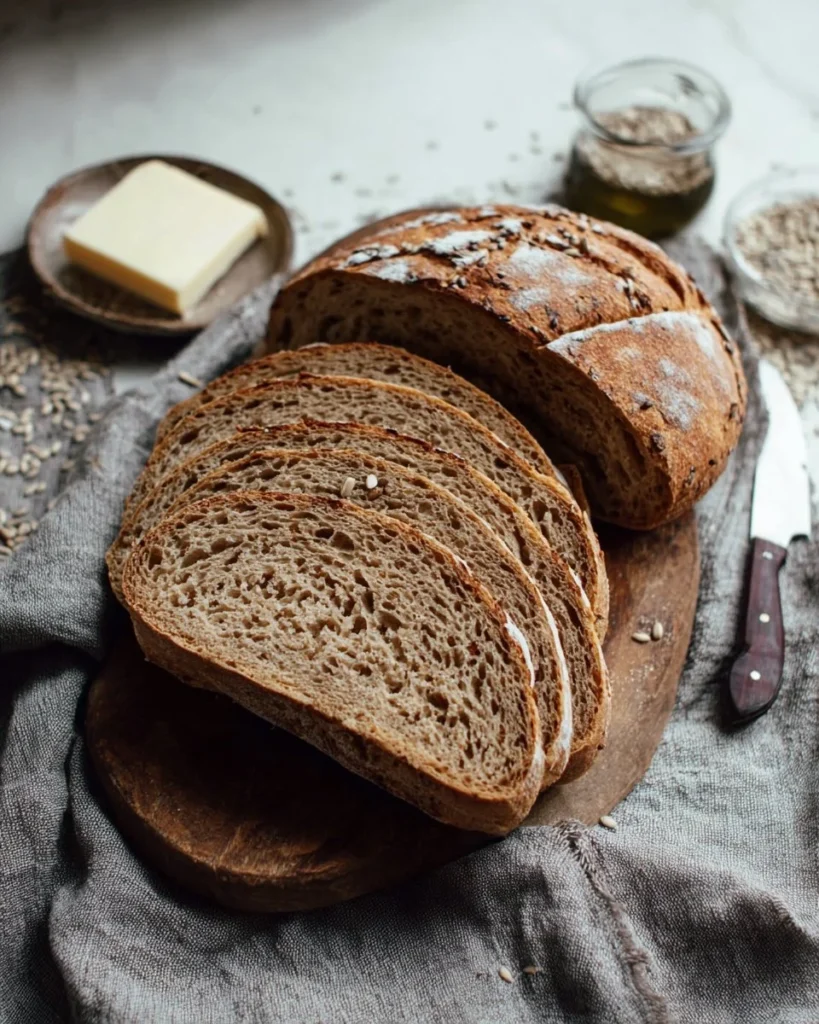
Lithuanian bread is a warm, hearty staple that reflects the rich cultural history of Lithuania. With its unique texture and flavor, this bread is perfect for breakfast, lunch, or dinner. By making your own Lithuanian bread, you’ll enjoy the satisfaction of baking with simple ingredients while creating a delicious addition to any meal. Plus, homemade bread fills your home with a wonderful aroma that brings a sense of warmth and comfort.
How to Make Lithuanian Bread
Ingredients
- 200 grams cool water (about 3/4 cup)
- 1/2 tsp dry active yeast
- 85 grams rye flour
- 115 grams unbleached bread flour
- 115 grams room temperature water (1/2 cup)
- 2 tsp dry active yeast
- 20 grams molasses (1 Tbsp)
- 20 grams vital wheat gluten
- 1 tsp sea salt
- 275 grams unbleached bread flour
Directions
- In a small bowl, mix 200 grams of cool water with 1/2 teaspoon of dry active yeast. Allow it to sit for about 5-10 minutes until frothy.
- In a large mixing bowl, combine 85 grams of rye flour and 115 grams of unbleached bread flour.
- Add the frothy yeast mixture to the dry ingredients.
- In another bowl, combine 115 grams of room temperature water, 2 teaspoons of dry active yeast, 20 grams of molasses, 20 grams of vital wheat gluten, and 1 teaspoon of sea salt. Mix until well blended.
- Slowly add this mixture to the first bowl. Stir together until a wet dough forms.
- Gradually add 275 grams of unbleached bread flour to the dough while mixing. You may need a little more flour if the dough is too sticky.
- Knead the dough on a lightly floured surface for about 10 minutes until it becomes smooth and elastic.
- Place the kneaded dough in a greased bowl, cover it with a cloth, and let it rise in a warm place for about 1-2 hours or until it doubles in size.
- Preheat your oven to 350°F (175°C).
- Punch down the risen dough and shape it into a loaf or desired form. Place it on a lined baking sheet.
- Let the shaped dough rise again for another 30-45 minutes.
- Bake in the preheated oven for 30-35 minutes or until the bread sounds hollow when tapped.
How to Serve Lithuanian Bread
Once your Lithuanian bread is baked to perfection, allow it to cool on a wire rack. You can slice it and serve it with butter, cheese, or hearty stews. It also goes wonderfully with soups or can be enjoyed simply with a drizzle of honey.
How to Store Lithuanian Bread
Store your Lithuanian bread in a cool, dry place. Wrap it in a clean kitchen towel or place it in a paper bag to keep it fresh. If you want to store it for a longer period, consider freezing it. Slice the bread before freezing so you can take out only what you need.
Tips to Make Lithuanian Bread
- Ensure your yeast is fresh for the best rise.
- Knead the dough well to develop gluten, which helps give the bread structure.
- Adjust the amount of flour based on the humidity of your kitchen.
- For a softer crust, you can brush the top with melted butter before baking.
Variation
You can add seeds like caraway or sunflower seeds for extra flavor and texture. Dried fruits like raisins or cranberries can also add a sweet twist to the bread.
FAQs
Q: Can I use whole wheat flour instead of unbleached bread flour?
A: Yes, you can. However, it may change the texture and flavor of the bread.
Q: How long will the bread last?
A: When stored properly, Lithuanian bread can last about 3-5 days. If frozen, it can last for several months.
Q: What can I serve with Lithuanian bread?
A: Lithuanian bread pairs well with soups, sandwiches, stews, or can be simply enjoyed with butter or jam.
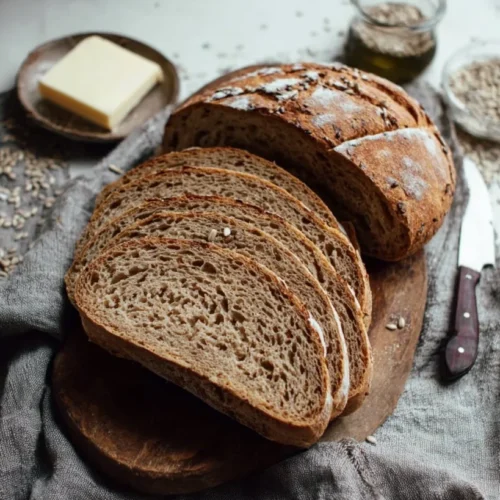
Lithuanian Bread
Ingredients
For the dough
- 200 grams cool water about 3/4 cup
- ½ tsp dry active yeast
- 85 grams rye flour
- 115 grams unbleached bread flour
- 115 grams room temperature water 1/2 cup
- 2 tsp dry active yeast
- 20 grams molasses 1 Tbsp
- 20 grams vital wheat gluten
- 1 tsp sea salt
- 275 grams unbleached bread flour
Instructions
Preparation
- In a small bowl, mix 200 grams of cool water with 1/2 teaspoon of dry active yeast. Allow it to sit for about 5-10 minutes until frothy.
- In a large mixing bowl, combine 85 grams of rye flour and 115 grams of unbleached bread flour.
- Add the frothy yeast mixture to the dry ingredients.
- In another bowl, combine 115 grams of room temperature water, 2 teaspoons of dry active yeast, 20 grams of molasses, 20 grams of vital wheat gluten, and 1 teaspoon of sea salt. Mix until well blended.
- Slowly add this mixture to the first bowl. Stir together until a wet dough forms.
- Gradually add 275 grams of unbleached bread flour to the dough while mixing. You may need a little more flour if the dough is too sticky.
- Knead the dough on a lightly floured surface for about 10 minutes until it becomes smooth and elastic.
- Place the kneaded dough in a greased bowl, cover it with a cloth, and let it rise in a warm place for about 1-2 hours or until it doubles in size.
Baking
- Preheat your oven to 350°F (175°C).
- Punch down the risen dough and shape it into a loaf or desired form. Place it on a lined baking sheet.
- Let the shaped dough rise again for another 30-45 minutes.
- Bake in the preheated oven for 30-35 minutes or until the bread sounds hollow when tapped.