
This artisan pizza dough is a high hydration, slow rise dough made with just flour, water, salt, and a tiny pinch of yeast, and it bakes into a crust that is crisp outside, chewy inside, and full of bubbles.
The method is mostly hands off. A long rest and a few gentle folds build the structure for you, and time develops the flavor, so a simple pantry dough tastes like it came from a pizzeria.
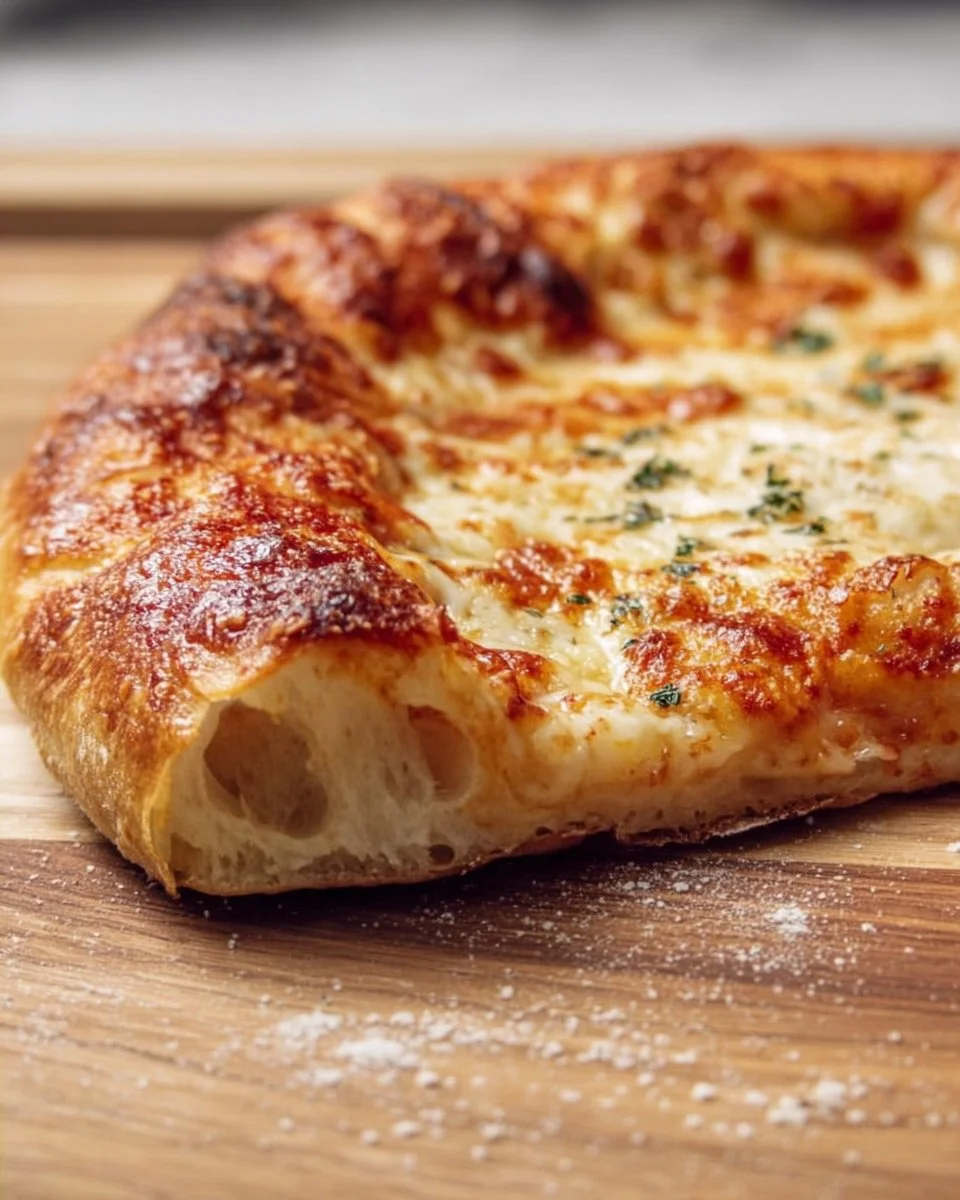
Table of Contents
Why This Artisan Pizza Dough Recipe Works
Resting the flour and water before adding the yeast and salt lets the flour absorb water on its own, which starts gluten development without kneading. Only a small amount of yeast is used, so the dough rises slowly over several hours and builds a deeper, wheaty flavor.
The high water content creates the open, bubbly crumb and a crust that blisters in a very hot oven. Folding the dough instead of kneading keeps those air pockets intact.
Ingredients for Artisan Pizza Dough
- 3 3/4 cups plus 2 tablespoons all-purpose flour (500 g)
- 1 1/2 cups plus 2 tablespoons warm water (375 g), divided
- 1/4 teaspoon active dry yeast (1 g)
- 1 1/2 teaspoons fine salt (10 g)
- 1 tablespoon olive oil for the bowl and the dough balls
Flour. All-purpose flour works well, and weighing it gives the most reliable results. Bread flour will make a chewier crust.
Warm water. It should feel just warm to the touch. Hot water can damage the yeast, and cold water slows the rise.
Yeast. The amount looks too small, but the long rise makes up for it. Do not add more or the dough will overproof.
Salt. It strengthens the dough and seasons the crust. Fine salt dissolves faster than coarse.
How to Make Artisan Pizza Dough
1. Mix and rest. Stir the flour with all but 1 tablespoon of the warm water until no dry flour remains. Cover and let it rest for 20 minutes.
2. Wake the yeast. Sprinkle the yeast over the reserved water and let it dissolve.
3. Add salt and yeast. Sprinkle the salt over the dough, stir the yeast water, and pour it on top.
4. Squeeze it in. With a wet hand, stretch and fold the dough over the liquid, then pinch off chunks and fold them over each other until the dough looks shaggy. Cover and rest for about an hour.
5. Fold once. Wet your hand, lift one side of the dough and fold it to the center. Turn the bowl and repeat until the dough tightens.
6. Let it rise. Turn the dough seam side down into an oiled bowl, cover, and let it double in volume, about 5 to 6 hours.
7. Divide and shape. Turn the dough onto a floured counter, cut it in half, and stretch and fold each piece into a tight ball.
8. Final rest. Place the balls on an oiled plate, oil the tops lightly, cover, and rest for about an hour before stretching.
How to Serve Artisan Pizza Dough
Stretch each ball by hand, top with sauce and cheese, and bake on a preheated stone or steel in the hottest oven you have. Start with our homemade pizza sauce, and compare this method with the best pizza dough recipe if you want a faster dough. You can also use leftover dough for homemade focaccia bread or fill it for pizza roll ups.
How to Store and Reheat Artisan Pizza Dough
If you are not baking right away, wrap the dough balls tightly in plastic wrap or place them in oiled containers and refrigerate for up to 2 days. Let the dough sit at room temperature for a while before stretching so it relaxes and handles easily. Baked crusts are best fresh, and leftover slices reheat well in a hot skillet or oven.
Tips and Variations for Artisan Pizza Dough
Weigh the ingredients. Hydration is high, so small flour changes make a big difference to how sticky the dough feels.
Keep your hand wet. Water prevents sticking far better than extra flour, which would dry out the dough.
Be patient with the rise. The dough is ready when it has doubled and looks airy, not when a specific hour passes. A cooler kitchen takes longer.
Preheat the oven fully. A stone or steel needs a long preheat to give the crust its blistered spring.
Use flour sparingly when shaping. A light dusting is enough, since too much will make the bottom of the pizza taste raw.
Do not taste raw dough. The Ohio State University extension explains why raw flour should be cooked before eating.
Try a cold ferment. A day in the refrigerator deepens the flavor even more.
Frequently Asked Questions About Artisan Pizza Dough
Why is my artisan pizza dough so sticky?
This is a wet dough on purpose. Wet hands and gentle folding handle it better than adding flour.
Can I make artisan pizza dough with bread flour?
Yes. Bread flour absorbs a bit more water and gives a chewier crust. You may want a spoonful more water if the dough feels stiff.
Can I use instant yeast?
Yes, use the same tiny amount and skip the dissolving step by sprinkling it over the dough with the salt before folding.
How do I know the dough has risen enough?
It should be doubled, jiggly, and covered with small bubbles. If you poke it gently, the dent should spring back slowly.
How many pizzas does this make?
The recipe makes two dough balls, enough for two medium pizzas or four good sized servings.
Artisan Pizza Dough
Equipment
- Large bowl
- Kitchen scale
- Plate
- Plastic wrap
Ingredients
Main Ingredients
- 3 ¾ cup all-purpose flour plus 2 tbsp, about 500 g
- 1 ½ cup warm water plus 2 tbsp, about 375 g, divided
- ¼ tsp active dry yeast about 1 g
- 1 ½ tsp fine salt about 10 g
- 1 tbsp olive oil for the bowl and dough balls
Instructions
Cooking
- Mix and rest. Stir the flour with all but 1 tbsp of the water until no dry flour remains. Cover and rest 20 minutes.
- Dissolve the yeast. Sprinkle the yeast over the reserved water.
- Add salt and yeast. Sprinkle the salt over the dough, then pour the yeast water on top.
- Squeeze and fold. With a wet hand, stretch and fold the dough and pinch off chunks until shaggy. Cover and rest 1 hour.
- Fold once. Lift and fold the dough to the center all around the bowl until it tightens.
- Rise. Place seam side down in an oiled bowl, cover, and let double, about 5 to 6 hours.
- Divide and shape. Cut in half on a floured counter and shape each piece into a tight ball.
- Final rest. Set on an oiled plate, oil the tops, cover, and rest about 1 hour.