This beginner sourdough bread asks for four ingredients and very little skill, which makes it the ideal first loaf to learn on. You mix, fold a few times, and let the refrigerator do the slow work overnight while you sleep.
There is no Dutch oven required and no complicated shaping. A baking sheet, a sharp knife, and a bubbly starter are enough to pull a crackly, golden loaf out of your oven with a tangy flavor that store bought bread cannot match.
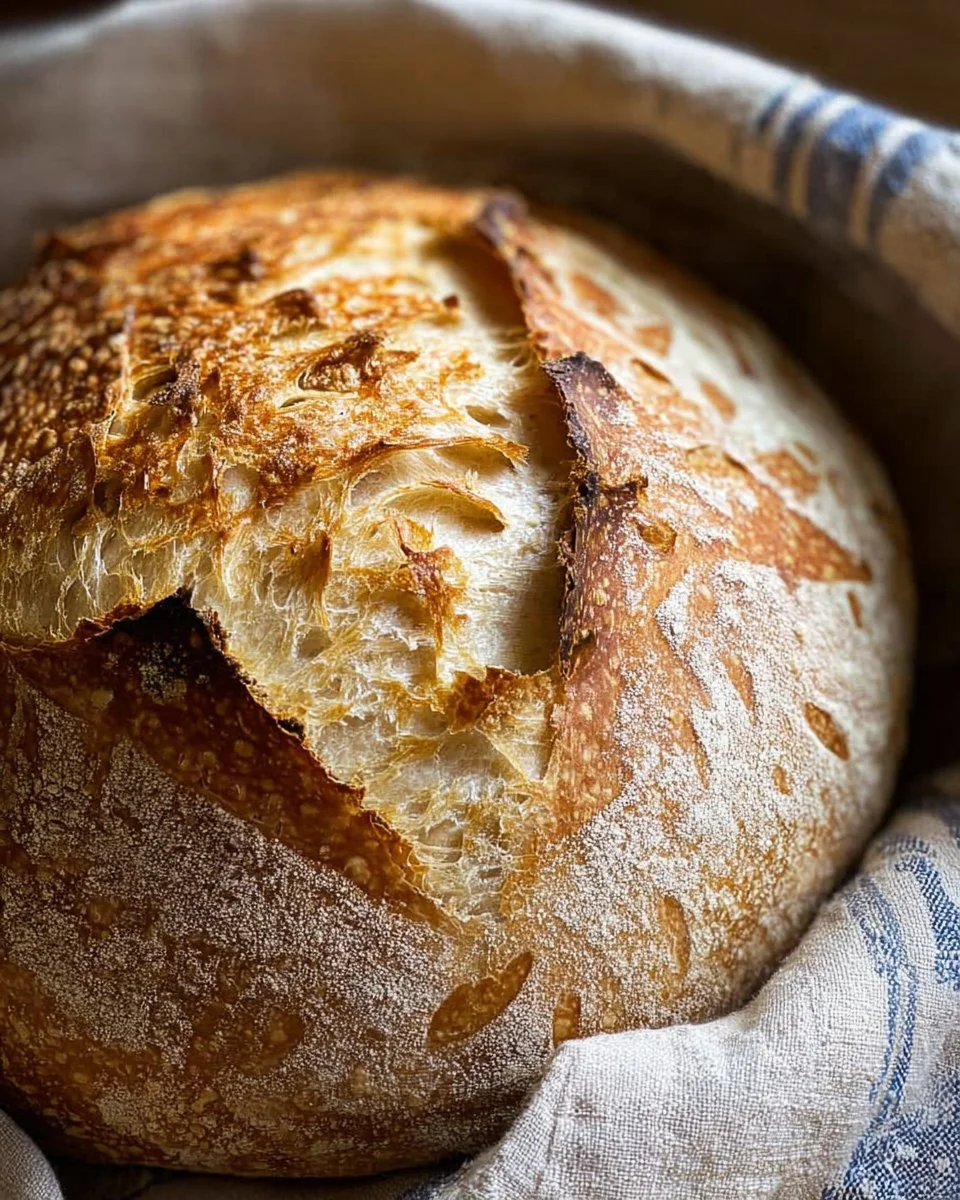
Table of Contents
Why This Beginner Sourdough Bread Recipe Works
A long, cold rise is the secret here. Twelve to twenty four hours in the refrigerator lets the dough build flavor slowly, so you get that gentle sourdough tang without any precise timing. If your day gets busy, the dough simply waits.
The dough is also forgiving. At roughly 72 percent hydration it is wet enough to give an open crumb but still easy to handle after a night in the cold. Three sets of stretch and folds replace kneading, so there is no mixer to clean and no sore arms.
Ingredients for Beginner Sourdough Bread
- 4 3/4 cups bread flour (600 g)
- 1 3/4 cups warm water (420 g)
- 1/2 cup active sourdough starter (100 g), fed 4 to 8 hours earlier
- 2 teaspoons fine sea salt (12 g)
- Flour for dusting
Bread flour. Its higher protein builds the gluten that traps gas and gives the loaf height. All purpose flour works, but hold back 2 tablespoons of water so the dough is not too slack.
Water. Use warm tap water, about 80 to 85 degrees F, to keep fermentation moving. Water that is too hot can weaken the starter.
Active starter. The starter should be bubbly, doubled in size, and pass the float test. A sleepy starter is the number one reason a loaf turns out dense.
Fine sea salt. Salt tightens the dough and controls fermentation. At 2 percent of the flour weight, it seasons the crumb without slowing the rise too much.
How to Make Beginner Sourdough Bread
1. Feed the starter. Feed your starter 4 to 8 hours before mixing, so it is bubbly and at its peak when you add it to the dough.
2. Mix flour and water. Stir the flour and water in a large bowl until no dry flour remains. Cover and rest 30 minutes so the flour can hydrate and the dough becomes smooth and stretchy.
3. Add starter and salt. Spread the starter and salt over the dough. Squeeze and fold with wet hands for 2 to 3 minutes until fully blended and the dough feels sticky but cohesive.
4. Stretch and fold. Every 30 minutes, grab one side of the dough, stretch it up, and fold it over the center. Turn the bowl and repeat 4 times. Do three sets total until the dough puffs and holds its shape.
5. Shape and chill. Tip the dough onto a floured counter and fold the edges to the middle to form a round. Place it seam side down in a floured bowl, cover with a damp cloth, and refrigerate 12 to 24 hours.
6. Score and bake. Heat the oven to 450 degrees F. Turn the dough onto a parchment lined baking sheet and score the top with a sharp knife. Bake 35 to 40 minutes, until deep golden brown and the inside reaches 205 degrees F.
7. Cool completely. Move the loaf to a wire rack and wait at least 1 hour before slicing. The crumb is still setting, and cutting early makes it gummy.
How to Serve Beginner Sourdough Bread
Slice it thick for toast with salted butter, or use it for sandwiches and soup dunking. Warm leftovers pair well with crusty sourdough rolls on the same table when you want variety, and the same starter works for whole wheat sourdough dinner rolls and fluffy sourdough biscuits. If you want a softer crumb for school lunches, try a classic white sandwich bread next.
How to Store and Reheat Beginner Sourdough Bread
Keep the cooled loaf at room temperature, cut side down on a board or wrapped in a clean towel or paper bag, for up to 3 days. Avoid plastic bags because they soften the crust. For longer storage, slice the loaf, freeze the slices in an airtight container, and toast them straight from frozen. To refresh a day old loaf, sprinkle the crust with water and warm it in a hot oven at 350 degrees F for 8 to 10 minutes.
Tips and Variations for Beginner Sourdough Bread
Use a scale. Weighing flour and water is more accurate than cups and is the easiest way to get consistent loaves.
Watch the dough, not the clock. If your kitchen is warm, the dough may be ready sooner. Look for a slightly domed top and bubbles at the edge.
Add steam. Place an empty metal pan on the lower rack while the oven heats, then pour in a cup of hot water when the loaf goes in for a crispier crust.
Try the Dutch oven. Preheat a lidded pot, bake covered 25 minutes at 450 degrees F, then uncover for 15 minutes for a taller loaf.
Score confidently. One quick slash about half an inch deep lets steam escape and gives the loaf an attractive ear.
Keep flour safe. Raw flour can carry germs, and OSU Extension advises not to taste raw dough, so wash your hands and tools after handling it.
Add mix ins. Fold in a handful of seeds or chopped herbs during the last set of folds for variety.
Save the discard. Extra starter at feeding time can go into pancakes, crackers, or biscuits instead of the trash.
Frequently Asked Questions About Beginner Sourdough Bread
Why is my beginner sourdough bread dense?
A weak starter or a short rise is the usual cause. Make sure the starter doubles within 4 to 8 hours of feeding and give the dough the full cold rise.
Can I bake beginner sourdough bread without a Dutch oven?
Yes. This recipe is written for a baking sheet. A pan of hot water on the bottom rack adds steam, and the crust still turns golden and crisp.
How do I know my starter is ready?
It should be bubbly, have risen to about double, and smell pleasantly sour. A small spoonful that floats in water is another good sign.
Can I leave the dough in the fridge longer than 24 hours?
Up to 24 hours gives the ideal balance. Beyond that the flavor gets quite sour and the dough can weaken.
Can I use whole wheat flour?
Swap up to 1 cup of the bread flour for whole wheat and add 2 tablespoons of water, since whole grain absorbs more.
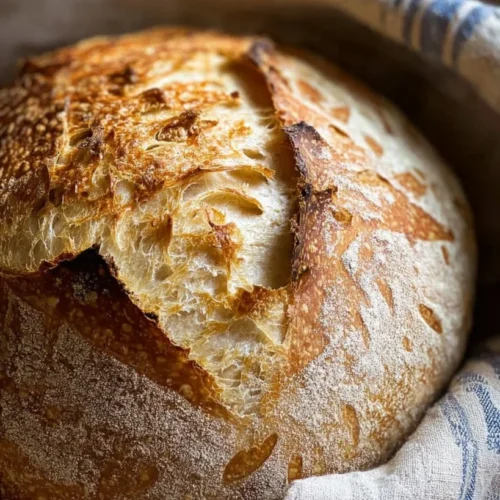
Beginner Sourdough Bread
Equipment
- Large mixing bowl
- Kitchen scale
- Baking sheet
- Parchment paper
- Sharp knife
- Wire rack
Ingredients
Main Ingredients
- 4 ¾ cup bread flour 600 g
- 1 ¾ cup warm water 420 g
- ½ cup active sourdough starter 100 g, fed 4 to 8 hours earlier
- 2 tsp fine sea salt 12 g
Instructions
Cooking
- Mix. Combine flour and water, rest 30 minutes, then work in the starter and salt until smooth.
- Fold. Do three sets of stretch and folds 30 minutes apart, then shape into a round.
- Chill. Rest seam side down in a floured bowl, covered, in the refrigerator 12 to 24 hours.
- Bake. Place on parchment, score, and bake at 450 degrees F for 35 to 40 minutes until deep golden and 205 degrees F inside.
- Cool. Rest on a wire rack for 1 hour before slicing.