Lithuanian bread is a satisfying loaf with a dark, chewy crust and a soft crumb that tastes faintly of rye and molasses. This lithuanian bread recipe uses a quick starter of rye and bread flour, so you get real depth of flavor without a sourdough culture or a long overnight ferment.
The dough comes together in one afternoon. You mix a wet starter, let it bubble for an hour, add the rest of the flour, knead, and bake one round loaf. Plan on about 4 hours from start to finish, most of it hands off, and a little under 40 minutes in the oven.
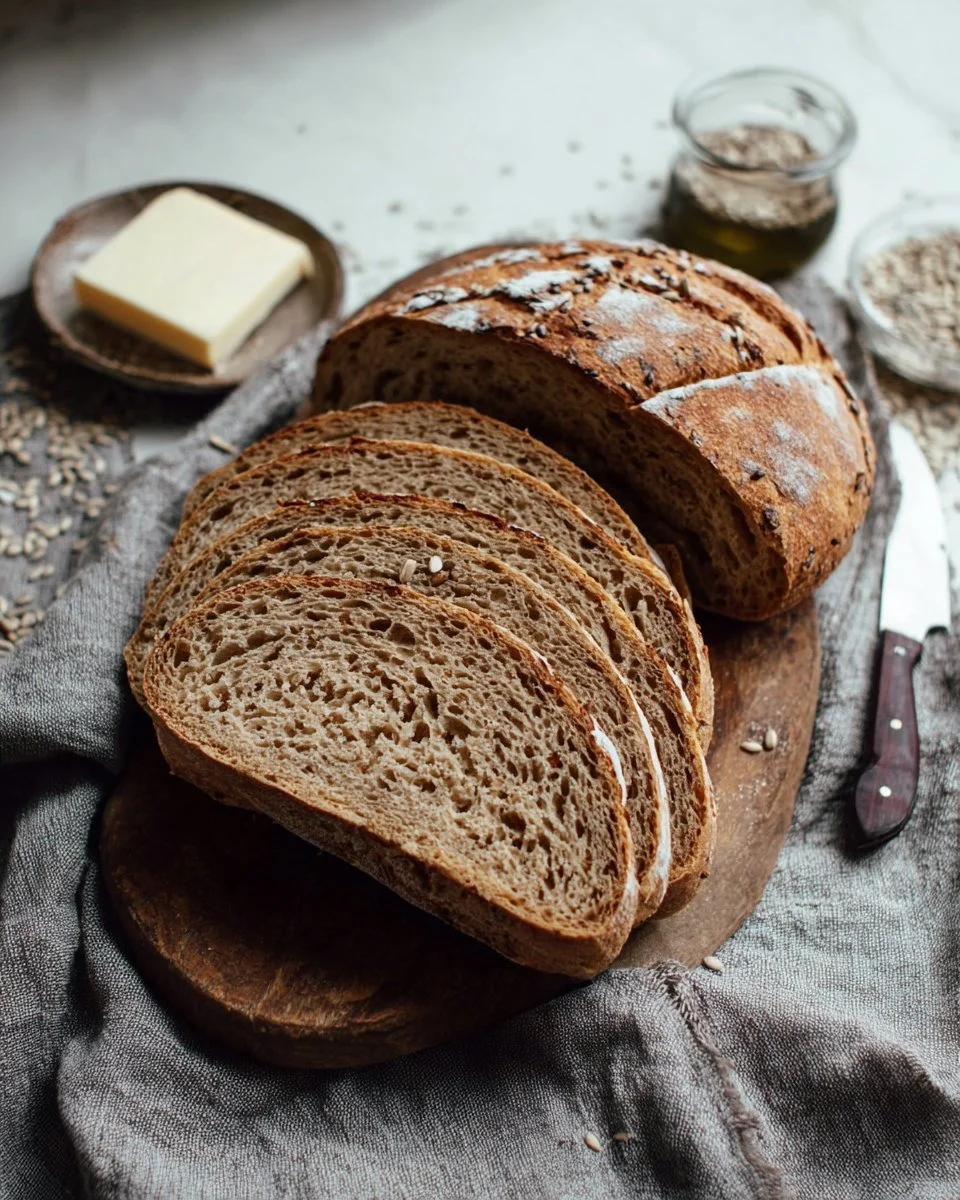
Table of Contents
Why This Lithuanian Bread Recipe Works
The starter does the heavy lifting. A mixture of rye flour, bread flour, water, and a little yeast ferments for an hour and builds the mild sour note people expect from Lithuanian bread. Rye also gives the crumb its moist, slightly dense chew.
Two small boosters keep the loaf tall and dark. Vital wheat gluten gives a rye dough extra strength so the loaf rises instead of spreading, and a spoonful of molasses adds color and a gentle sweetness that balances the rye.
Ingredients for Lithuanian Bread
- 200 grams cool water (about 3/4 cup), for the starter
- 1/2 teaspoon dry active yeast, for the starter
- 85 grams rye flour (about 2/3 cup)
- 115 grams unbleached bread flour, for the starter
- 115 grams room temperature water (1/2 cup)
- 1 1/2 teaspoons dry active yeast
- 20 grams molasses (1 tablespoon)
- 20 grams vital wheat gluten
- 1 1/2 teaspoons sea salt
- 275 grams unbleached bread flour, added to the dough
Rye flour. Rye brings the earthy flavor and the moist crumb. Use more than the amount here and the loaf turns dense, so measure by weight.
Vital wheat gluten. It adds structure to a dough that is part rye. Skip it only if you are happy with a flatter, tighter loaf.
Molasses. One tablespoon gives color and a faint sweetness. Honey works, though the crust will be lighter.
Bread flour. Its higher protein gives the chew. All purpose flour works, but hold back a spoonful of water if the dough feels loose.
How to Make Lithuanian Bread
1. Make the starter. Stir 200 grams of cool water with 1/2 teaspoon of yeast, then mix in the rye flour and 115 grams of bread flour until no dry spots remain. Cover and leave it for 1 hour at room temperature, until bubbly and puffed.
2. Mix the dough. Stir the room temperature water, 1 1/2 teaspoons of yeast, molasses, gluten, and salt together, then pour it into the starter and stir to a wet dough.
3. Add the flour. Work in 275 grams of bread flour a little at a time. Add a spoonful more only if the dough sticks to your hands like glue.
4. Knead. Knead on a lightly floured surface for about 10 minutes, until smooth and elastic and it springs back slowly when poked.
5. Let it rise. Place the dough in a greased bowl, cover it with a kitchen towel, and rise in a warm spot for 1 to 1 1/2 hours, until doubled.
6. Shape. Press out the air gently and shape a tight round loaf. Set it on a baking sheet lined with parchment.
7. Proof. Cover and rest 30 to 40 minutes while the oven heats to 400 degrees F. The loaf should look puffy and hold a dent for a moment when pressed.
8. Bake. Slash the top once with a sharp knife and bake 35 to 40 minutes, until deep brown and hollow sounding when tapped, or 200 degrees F inside. Cool on a wire rack for at least 1 hour before slicing.
How to Serve Lithuanian Bread
Slice it thick and serve with butter and a bowl of soup. It is excellent next to red potato soup or beside dutch oven pot roast for mopping up the juices.
Baking for a crowd? Set it on the table with soft crusty bread loaves and honey butter dinner rolls so there is a softer option too.
How to Store and Reheat Lithuanian Bread
Cool the loaf completely, then keep it in a paper bag or wrapped in a clean kitchen towel at room temperature for 2 to 3 days. Plastic softens the crust.
For longer storage, slice the loaf and freeze the slices in a zip top bag, then toast them straight from the freezer.
Tips and Variations for Lithuanian Bread
Weigh the flour. Rye and bread flour pack very differently by the cup, and a scale keeps the dough from turning stiff.
Use fresh yeast. Old yeast is the top cause of a flat loaf. If the starter does not bubble, start over.
Keep the dough slightly tacky. A sticky rye dough bakes into a softer crumb, so add flour only a spoonful at a time.
Rise in a warm spot. A turned off oven with the light on holds a steady temperature.
Bake on the middle rack. This gives even browning on the top and bottom of the loaf.
Wait before slicing. The crumb finishes setting as the loaf cools, and a warm loaf gums up under the knife.
Add caraway. A teaspoon of caraway seeds kneaded into the dough gives a classic rye flavor.
Know your storage basics. For general guidance on handling and storing leftovers, see this Purdue Extension leftovers guide.
Frequently Asked Questions About Lithuanian Bread
What makes lithuanian bread different from other rye breads?
This loaf is mostly wheat with a smaller share of rye, so it stays soft and sliceable while still tasting of rye. The molasses gives color and a hint of sweetness.
Can I make lithuanian bread without vital wheat gluten?
Yes. The loaf will be a little shorter and denser, but it still tastes good. Use bread flour for all of the wheat flour to help.
How do I know my lithuanian bread is baked through?
Look for a deep brown crust, a hollow sound when you tap the bottom, or 200 degrees F on an instant read thermometer.
Can I use all purpose flour?
You can, but the loaf will be less chewy. Hold back a spoonful of water so the dough does not turn loose.
Why is my dough so sticky?
Rye flour absorbs water slowly, so the dough feels wetter at first. Rest it a few minutes and knead again before adding more flour.
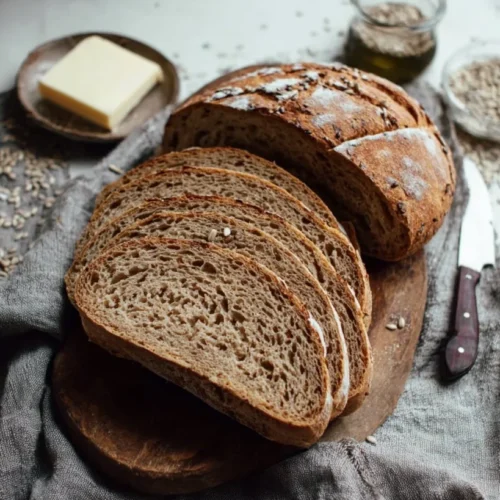
Lithuanian Bread with Rye and Molasses
Equipment
- Large mixing bowl
- Small bowl
- Baking sheet
- Parchment paper
- Kitchen towel
- Sharp knife
- Wire rack
- Instant read thermometer
Ingredients
Main Ingredients
- 200 grams cool water about 3/4 cup, for the starter
- ½ tsp dry active yeast for the starter
- 85 grams rye flour about 2/3 cup
- 115 grams unbleached bread flour for the starter
- 115 grams room temperature water about 1/2 cup
- 1 ½ tsp dry active yeast
- 20 grams molasses about 1 tablespoon
- 20 grams vital wheat gluten
- 1 ½ tsp sea salt
- 275 grams unbleached bread flour added to the dough
Instructions
Cooking
- Make the starter. Mix the cool water, 1/2 teaspoon yeast, rye flour, and 115 grams bread flour. Cover and rest 1 hour until bubbly.
- Mix the dough. Stir the room temperature water, remaining yeast, molasses, gluten, and salt, then stir into the starter.
- Add flour and knead. Work in 275 grams bread flour, then knead 10 minutes until smooth and springy.
- Rise. Rest the dough in a greased, covered bowl for 1 to 1 1/2 hours, until doubled.
- Shape and proof. Shape a tight round, set it on a parchment lined sheet, and rest 30 to 40 minutes while the oven heats to 400 degrees F.
- Bake. Slash the top and bake 35 to 40 minutes, until deep brown and 200 degrees F inside. Cool on a rack for 1 hour.