This skillet yeast bread proves you do not need an oven to bake a soft, golden loaf. A simple yeast dough rises twice, then cooks slowly in a covered pan on the stove until the crust turns brown and the inside stays tender.
It is a great option for hot days, small kitchens, or anyone without a working oven. The dough needs patience for rising, but most of that time is hands off, and the result is a fluffy loaf you can slice for toast, sandwiches, or dipping.
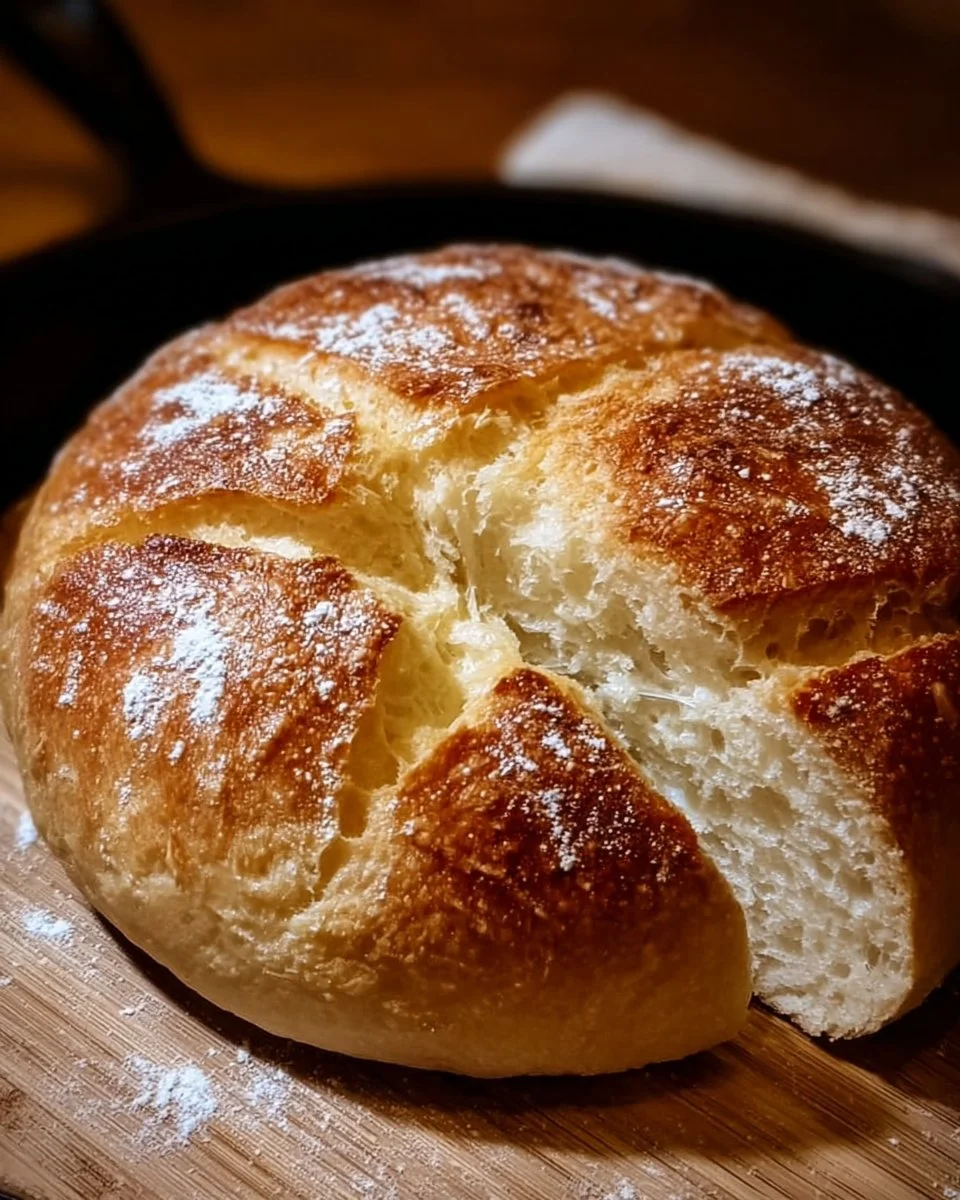
Table of Contents
Why This Skillet Yeast Bread Recipe Works
Yeast gives the loaf real bread texture. Warm water and a little sugar wake the yeast, and two rises build the airy crumb that makes the slices soft and chewy.
Butter, milk, and egg enrich the dough, so the loaf stays tender even though it cooks in a skillet instead of an oven. The fat also helps the crust brown evenly.
A tight fitting lid traps steam and heat around the loaf. Low, steady heat cooks the center before the outside darkens too much, which is the key to a stovetop loaf.
Ingredients for Skillet Yeast Bread
- 3 cups all purpose flour, plus more for dusting
- 2 1/4 tsp active dry yeast (1 envelope)
- 1 tbsp sugar
- 1/2 cup warm water, 105 to 110 degrees F
- 3/4 cup warm milk
- 1/4 cup unsalted butter, melted
- 1 large egg, at room temperature
- 1 1/2 tsp kosher salt
- 2 tbsp olive oil, divided
Active dry yeast. Check the date on the packet. Water that feels warm but not hot on your wrist, about 105 to 110 degrees F, keeps the yeast alive.
All purpose flour. Measure by spooning flour into the cup and leveling it. Packed flour makes a dense loaf.
Milk and butter. Warm both so they do not slow the yeast. They soften the crumb and add richness.
Egg. It adds structure and color. Bring it to room temperature so the dough stays warm.
Olive oil. One tablespoon goes into the dough, with the rest used to grease the bowl and the pan so the bottom crust browns evenly without sticking.
How to Make Skillet Yeast Bread
1. Activate the yeast Stir the yeast and sugar into the warm water and let it sit for 5 to 10 minutes, until foamy.
2. Mix the dough Whisk the flour and salt in a large bowl. Add the foamy yeast, warm milk, melted butter, egg, and 1 tablespoon of olive oil, then stir until a soft dough forms.
3. Knead Turn the dough onto a floured surface and knead for 8 to 10 minutes, until smooth and elastic.
4. Rise once Place the dough in an oiled bowl, cover with a towel, and let it rise in a warm spot for 1 to 1 1/2 hours, until doubled.
5. Shape and rest Punch the dough down, shape it into a round loaf, and cover it. Let it rise again for 30 minutes.
6. Cook the first side Heat a nonstick or cast iron skillet over medium low heat with a little oil. Add the loaf, cover with a lid, and cook for about 12 minutes, until the bottom is golden brown.
7. Flip and finish Flip the loaf, cover again, and cook for about 12 minutes more, until golden and hollow sounding when tapped. The inside should reach about 190 degrees F.
8. Cool before slicing Move the bread to a wire rack and cool for at least 20 minutes so the crumb sets.
How to Serve Skillet Yeast Bread
Slice the warm bread and serve it with butter, honey, or jam. It is sturdy enough for sandwiches and makes excellent toast the next day. Try it alongside creamy pumpkin soup or six ingredient beef chili for dunking. It also pairs with Dutch oven pot roast to mop up the gravy, and with whipped feta dip with honey as a snack.
How to Store and Reheat Skillet Yeast Bread
Wrap the cooled loaf tightly in plastic wrap or keep it in an airtight container at room temperature for up to 2 days. For longer storage, slice it and freeze the slices in a zip top bag for up to 3 months, then toast them straight from the freezer. Skip the refrigerator, since it dries bread out faster.
Tips and Variations for Skillet Yeast Bread
Check the yeast. If the mixture does not foam within 10 minutes, start over with fresh yeast.
Keep the heat low. High heat darkens the crust before the center cooks. Medium low is the safest setting.
Use a heavy pan. A cast iron skillet spreads heat evenly. A nonstick pan with a snug lid also works.
Test with a thermometer. The center of finished bread should read about 190 degrees F on an instant read thermometer.
Add flavor. Fold in a handful of shredded cheese, chopped herbs, or garlic powder after kneading.
Rise in a warm spot. A draft free corner of the kitchen works well, since cold rooms slow the rise.
Skip the raw dough. Do not taste the dough, since raw flour and raw egg can carry bacteria. Honey on the finished slices is not safe for children under 1 year.
Slice when cool. Warm bread tears and gums up. For guidance on storing leftovers, see the University of Minnesota Extension guide to storing leftovers.
Frequently Asked Questions About Skillet Yeast Bread
Can skillet yeast bread really cook without an oven?
Yes. A covered skillet over low heat traps enough steam and warmth to cook the loaf through while the crust browns on each side.
How do I know skillet yeast bread is done?
It should sound hollow when tapped and read about 190 degrees F in the center. Both sides should be deep golden.
Why is my skillet yeast bread dense?
Old yeast, too much flour, or a short rise are the usual causes. Spoon and level the flour and let the dough double fully.
Can I use whole wheat flour?
Replace up to half of the flour with whole wheat, and add a tablespoon or two of extra milk since it absorbs more liquid.
Can I make the dough overnight?
Yes. After kneading, refrigerate the dough in an oiled, covered bowl for up to 12 hours, then let it warm up and finish the second rise.
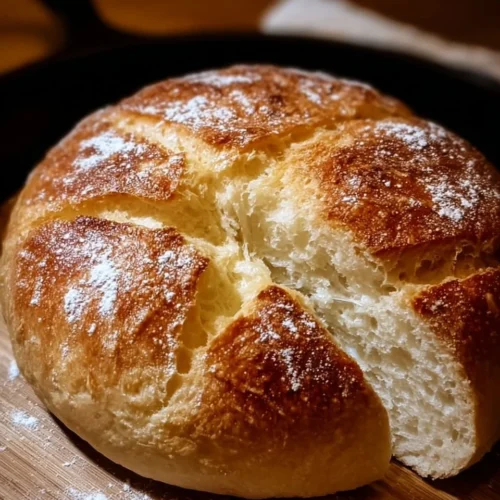
No Oven Skillet Yeast Bread
Equipment
- large skillet with lid
- Large mixing bowl
- Wire rack
- Kitchen towel
- Instant read thermometer
Ingredients
Main Ingredients
- 3 cup all purpose flour plus more for dusting
- 2 ¼ tsp active dry yeast 1 envelope
- 1 tbsp sugar
- ½ cup warm water 105 to 110 degrees F
- ¾ cup warm milk
- ¼ cup unsalted butter melted
- 1 large egg room temperature
- 1 ½ tsp kosher salt
- 2 tbsp olive oil divided, 1 tbsp for the dough and the rest for the bowl and skillet
Instructions
Cooking
- Proof the yeast. Combine the yeast, sugar, and warm water and wait 5 to 10 minutes for a foamy top.
- Make the dough. Stir the flour, salt, yeast mixture, milk, butter, egg, and 1 tablespoon olive oil into a soft dough, then knead for 8 to 10 minutes until smooth.
- First rise. Rest the dough in an oiled covered bowl for 1 to 1 1/2 hours, until doubled in size.
- Shape. Punch down the dough, shape a round loaf, cover, and let it puff for 30 minutes.
- Cook. Cook the loaf covered in an oiled skillet over medium low heat for about 12 minutes per side, until golden and about 190 degrees F inside.
- Cool. Cool the loaf on a wire rack for 20 minutes before slicing.