Stovetop vanilla custard is a silky, spoonable dessert made with only milk, eggs, sugar, and vanilla, and it comes together in about twenty minutes. It tastes like a warm, comforting bowl of dessert without any fuss.
Because it cooks gently in a saucepan, you get a smooth, pourable result that works as a dessert on its own or a sauce for fruit, cake, and pie. Once you know the cues for thickening, the method is easy to repeat.
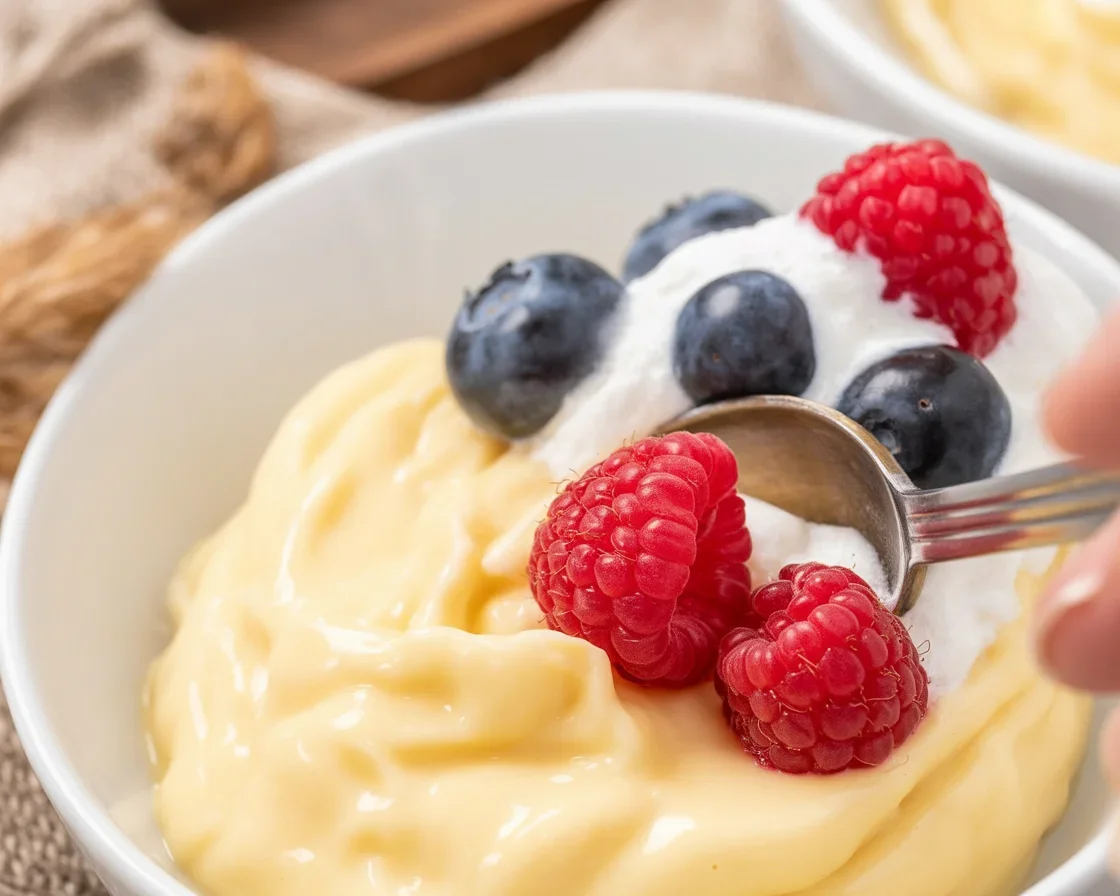
Table of Contents
Why This Stovetop Vanilla Custard Recipe Works
Whole eggs thicken the milk as they warm, which gives the custard a soft, creamy body without any flour or cornstarch. The result tastes clean and rich, with a gentle vanilla finish.
Tempering, which means adding the warm milk to the eggs slowly, raises the egg temperature gradually. That step prevents scrambled bits and keeps the final texture silky.
Low heat and constant stirring are the whole secret. Cooking slowly lets the proteins set evenly so you can stop at the exact moment the custard coats a spoon.
Ingredients for Stovetop Vanilla Custard
- For the custard: two cups whole milk, three large eggs, one third cup granulated sugar, and a pinch of salt.
- For flavor: one teaspoon vanilla extract, added after the custard comes off the heat.
Whole milk: Whole milk gives the creamiest texture, and two percent milk makes a lighter custard that still thickens well.
Large eggs: Eggs set the custard, so use fresh ones and bring them out of the refrigerator a few minutes before whisking.
Granulated sugar: Sugar sweetens the mixture and helps the eggs blend smoothly into the warm milk.
Vanilla extract: Pure vanilla stirred in at the end keeps its aroma, while almond extract or orange zest offers a different note.
Salt: A small pinch sharpens the sweetness and makes the dairy flavor taste more rounded.
How to Make Stovetop Vanilla Custard
1. Warm the milk. Heat the milk in a heavy saucepan over medium low heat until steam rises and tiny bubbles form at the edges. Do not let it boil.
2. Whisk the eggs. In a large bowl, whisk the eggs, sugar, and salt until the mixture looks smooth, pale, and slightly thick.
3. Temper the eggs. Pour the warm milk into the eggs in a slow stream while whisking nonstop so the eggs warm gently without scrambling.
4. Return to the pan. Pour the mixture back into the saucepan and set it over low heat, stirring constantly with a wooden spoon and scraping the bottom and corners.
5. Cook until thick. Continue stirring for five to seven minutes until the custard coats the back of the spoon and reaches 170 F.
6. Finish and serve. Remove the pan from the heat, stir in the vanilla, and pour the custard through a sieve into bowls or a pitcher.
How to Serve Stovetop Vanilla Custard
Spoon the warm custard into small bowls and dust the top with nutmeg, or chill it for a cold dessert. It also works as a sauce over sheet pan apple crisp or beside a slice of lemon layer cake. Fresh berries and a piece of fresh fruit pavlova pair well with it, and a plate of fudgy chocolate chunk brownies turns it into a bigger spread.
How to Store and Reheat Stovetop Vanilla Custard
Cool the custard quickly and refrigerate it within two hours. Press plastic wrap directly against the surface to prevent a skin from forming, and store it for up to three days. Serve it chilled or warm it gently in a saucepan over low heat, stirring until it reaches 165 F. Do not freeze custard, because freezing makes it split and turn watery when thawed.
Tips and Variations for Stovetop Vanilla Custard
Use a heavy pan. A heavy bottomed saucepan spreads the heat evenly and lowers the chance of scorching the milk.
Keep the heat low. High heat curdles the eggs quickly, so never rush the thickening step.
Strain if needed. Pouring through a fine sieve catches any small bits of cooked egg and leaves the custard silky.
Rescue a grainy custard. If it begins to look grainy, remove it from the heat at once and whisk hard, or blend it briefly.
Add flavor. Steep a split vanilla bean or a strip of orange zest in the milk while it heats for a deeper aroma.
Do not taste raw mixture. Do not taste the raw egg and milk mixture, and wash hands and tools after handling raw eggs.
Flag the allergens. Custard contains milk and eggs, so label it clearly for guests with dairy or egg allergies.
Check trusted guidance. See the Montana State University Extension egg fact sheet for safe egg handling and cooking temperatures.
Frequently Asked Questions About Stovetop Vanilla Custard
What is stovetop vanilla custard?
It is a pourable egg and milk custard thickened gently on the stove and flavored with vanilla, served warm or cold.
How do I know when stovetop vanilla custard is done?
It should coat the back of a spoon so a finger drawn across leaves a clear line, and a thermometer should read about 170 F.
Can I fix curdled stovetop vanilla custard?
Sometimes. Take the pan off the heat right away and whisk or blend the mixture until smooth, then strain it.
Can I use plant milk?
Unsweetened oat or soy milk can work, but the custard will be slightly thinner and the flavor will change.
What can I serve with custard?
Custard is lovely over fruit crisps, sponge cake, and fresh berries, or eaten by itself with a pinch of nutmeg.
Stovetop Vanilla Custard
Equipment
- heavy saucepan
- Whisk
- Wooden spoon
- Fine sieve
- kitchen thermometer
Ingredients
Main Ingredients
- 2 cup whole milk 2 percent milk also works
- 3 large eggs
- ⅓ cup granulated sugar
- 1 tsp vanilla extract or a little almond extract or orange zest
- 1 pinch salt
Instructions
Cooking
- Warm. Heat the milk in a saucepan over medium low heat until steaming with small bubbles at the edge. Do not let it boil.
- Whisk. Whisk the eggs, sugar, and salt in a bowl until smooth and pale.
- Temper. Slowly pour the warm milk into the eggs while whisking constantly so the eggs do not scramble.
- Thicken. Return everything to the pan over low heat and stir constantly for 5 to 7 minutes, until the custard coats the back of a spoon and reaches 170 F.
- Finish. Remove from the heat, stir in the vanilla, and pour into bowls to serve warm or chilled.