Chocolate cut out cookies bake up with crisp edges, a tender bite, and a deep cocoa flavor, and they hold their shape in the oven so every star, heart, or snowflake looks sharp.
This dough uses a handful of pantry ingredients, comes together in one bowl with a mixer, and makes 24 cookies. The whole project takes about 1 hour 50 minutes, but most of that is chilling time that lets the butter firm up before cutting.
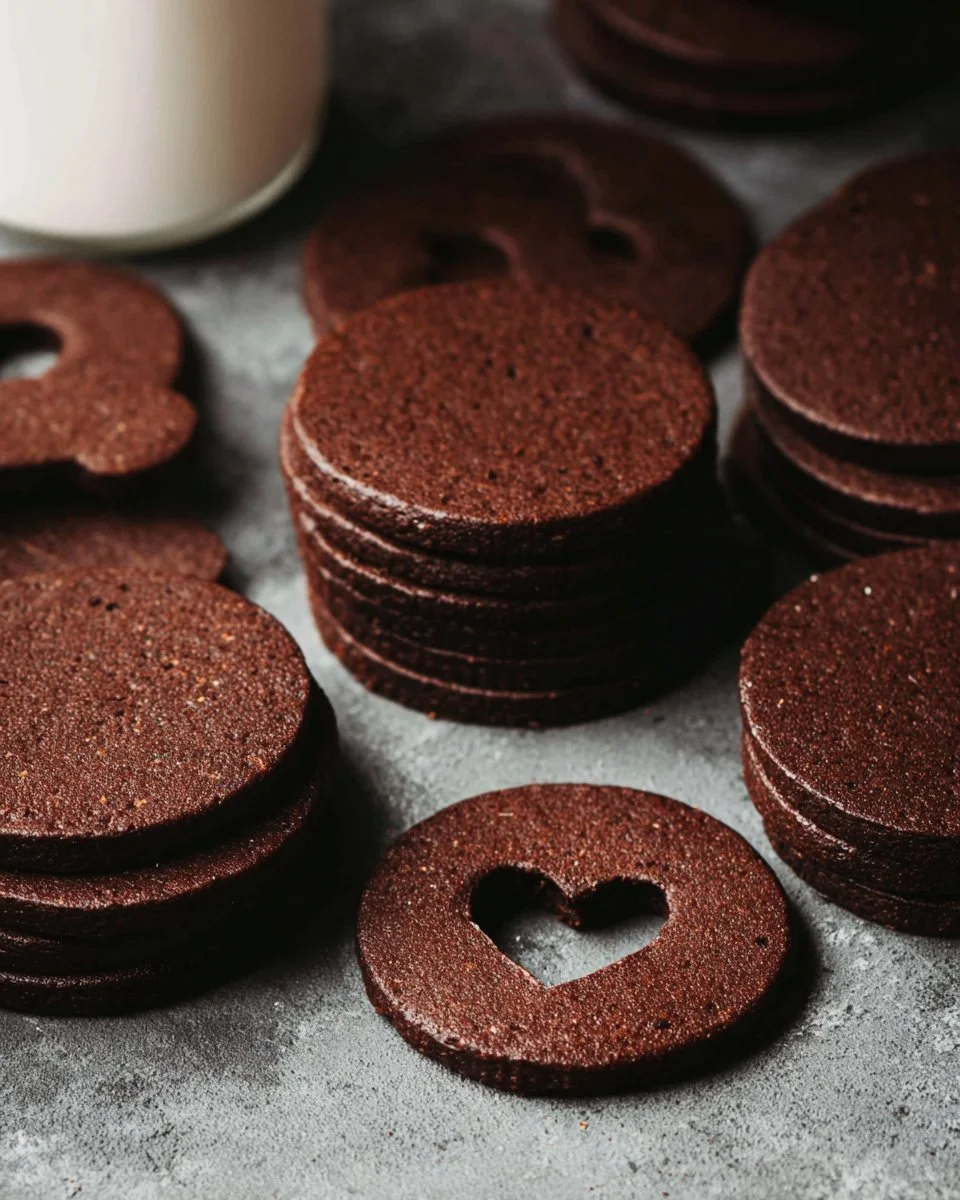
Table of Contents
Why This Chocolate Cut Out Cookies Recipe Works
Powdered sugar gives the dough a smooth, fine crumb and helps the edges stay clean instead of spreading. A modest amount of flour keeps the cookies tender, while unsweetened cocoa powder adds rich flavor without drying out the dough.
Chilling twice is the real secret. The dough rests as a disk, then the rolled sheet spends 10 to 15 minutes in the freezer, so the butter is cold when the cookies reach the oven. Cold butter means sharp shapes and very little puffing.
The dough is also forgiving. It rolls easily between sheets of parchment, so you need almost no extra flour, and the scraps can be rerolled once or twice without turning tough.
Ingredients for Chocolate Cut Out Cookies
- 1/2 cup (1 stick, 113 g) unsalted butter, softened
- 2/3 cup (80 g) powdered sugar
- 1 large egg, at room temperature
- 1 teaspoon vanilla extract
- 1 1/2 cups (180 g) all purpose flour
- 1/4 cup (25 g) unsweetened cocoa powder
- 1 pinch salt
- 1/2 teaspoon baking powder (optional)
Unsalted butter. Soften it until a finger leaves a clear dent without sinking all the way through. Butter that is too warm makes dough that spreads.
Powdered sugar. It dissolves fully into the butter, which keeps the surface smooth and the edges crisp.
Egg. Use a room temperature egg so it blends into the butter without making the mixture look curdled.
Cocoa powder. Unsweetened cocoa gives a deep chocolate flavor. Sift it with the flour to remove lumps that would leave dry streaks.
Baking powder. This is optional. Leave it out for the sharpest edges, or add it for a slightly softer, lifted bite.
Vanilla and salt. Vanilla rounds out the cocoa, and a pinch of salt keeps the sweetness in check.
How to Make Chocolate Cut Out Cookies
1. Prep the pans. Heat the oven to 350 degrees F and line two baking sheets with parchment paper. Sift the flour, cocoa powder, salt, and baking powder, if using, into a medium bowl.
2. Cream the butter. Beat the softened butter and powdered sugar with an electric mixer for about 2 minutes, until smooth and creamy with no lumps of butter left.
3. Add the egg. Mix in the egg and vanilla until fully combined. Scrape the bowl once so nothing hides on the bottom.
4. Mix the dough. Add the flour mixture and mix on low speed just until the dough comes together. It will look sticky and soft, which is normal.
5. Chill the disk. Gather the dough into a ball, flatten it into a disk, wrap it in plastic wrap, and refrigerate for at least 20 minutes, until firm enough to roll.
6. Roll and freeze. Roll the dough between two sheets of parchment to about 1/8 inch thick. Slide the rolled dough, still between the parchment, onto a tray and freeze for 10 to 15 minutes.
7. Cut the shapes. Peel off the top parchment and cut shapes with cookie cutters, leaving about 1 inch between cookies on the baking sheets. Gather the scraps, reroll, and chill again if they soften.
8. Bake. Bake one sheet at a time for 8 to 10 minutes, until the edges look firm and the centers are slightly soft. Rotate the pan halfway through if your oven runs uneven.
9. Cool. Let the cookies rest on the sheet for a few minutes, then move them to a wire rack to cool completely before decorating.
How to Serve Chocolate Cut Out Cookies
Serve these cookies plain with a glass of cold milk, or decorate them once they are fully cool. A simple powdered sugar glaze works well, and pink frosted sugar cookies show how a soft frosting looks on a cut shape. For a seasonal cookie plate, pair them with easy cut out sugar cookies, rolled sugar cookies, and chewy chocolate espresso cookies for a mix of textures.
How to Store and Reheat Chocolate Cut Out Cookies
Store the baked cookies in an airtight container at room temperature for up to 1 week. Keep decorated cookies in a single layer so the icing stays intact. Wrap the dough disk tightly and freeze it for up to 3 months, then thaw it in the refrigerator overnight before rolling.
Tips and Variations for Chocolate Cut Out Cookies
Weigh the flour. If you have a kitchen scale, use 180 g of flour. If not, spoon the flour into the cup and level it so the dough does not turn dry.
Use parchment, not flour. Rolling between parchment sheets keeps extra flour out of the dough, which protects the deep chocolate flavor.
Dip the cutters. Dip each cutter in cocoa powder or flour between cuts so the dough does not stick, and cut shapes close together to save scraps.
Keep sizes even. Cut cookies of similar size on the same pan so they finish baking at the same time.
Add flavor. Stir 1/2 teaspoon of instant espresso powder into the dry ingredients to deepen the chocolate, or use peppermint extract in place of vanilla for a seasonal twist.
Decorate with care. Wait until the cookies are completely cool before adding icing or sprinkles, otherwise the glaze will melt and slide off.
Make ahead. Cut the shapes the day before, freeze them on a tray, and bake them straight from the freezer.
Handle raw dough safely. This dough contains a raw egg, so do not taste it before baking. For general guidance on raw dough and food safety, see this Ohio State University Extension article.
Frequently Asked Questions About Chocolate Cut Out Cookies
Why do my chocolate cut out cookies spread in the oven?
Spreading usually means the butter was too warm or the dough skipped the freezer step. Chill the cut shapes on the pan for 10 minutes if your kitchen is hot, and measure the flour carefully.
Can I make chocolate cut out cookies without baking powder?
Yes. The baking powder is optional. Without it, the cookies stay flatter with crisper edges, which is ideal for detailed cutters.
How thick should chocolate cut out cookies be rolled?
Roll the dough to about 1/8 inch thick. Thinner cookies turn crisp, while thicker ones stay softer but may lose fine details.
Can I freeze the dough?
Yes. Wrap the dough disk tightly and freeze it for up to 3 months, then thaw it in the refrigerator overnight before rolling.
How do I know when the cookies are done?
Look for firm edges and centers that are slightly soft. The cookies firm up as they cool on the sheet, so pulling them at the right moment keeps them tender.

Chocolate Cut Out Cookies
Equipment
- Electric mixer
- Rolling Pin
- Cookie cutters
- Baking sheets
- Parchment paper
- Wire rack
Ingredients
Main Ingredients
- ½ cup unsalted butter softened to room temperature (113 g)
- ⅔ cup powdered sugar about 80 g
- 1 large egg at room temperature
- 1 tsp vanilla extract
- 1 ½ cup all purpose flour spooned and leveled (180 g)
- ¼ cup unsweetened cocoa powder sifted (25 g)
- 1 pinch salt
- ½ tsp baking powder optional, leave out for sharper edges
Instructions
Cooking
- Sift the dry ingredients. Whisk 1 1/2 cups flour, 1/4 cup cocoa powder, the pinch of salt, and the baking powder, if using, then sift to remove cocoa lumps. Cream the butter. Beat 1/2 cup softened butter with 2/3 cup powdered sugar for 2 to 3 minutes, until smooth and creamy.
- Add the egg. Mix in the egg and 1 teaspoon vanilla until the batter looks uniform, scraping the bowl once. Form the dough. Add the dry mixture on low speed and stop as soon as a soft, sticky dough forms.
- Chill the dough. Flatten the dough into a disk, wrap it, and refrigerate for 20 minutes until firm. Roll and freeze. Roll between two sheets of parchment to 1/8 inch thick, then freeze the sheet on a tray for 10 to 15 minutes.
- Cut the cookies. Cut shapes, place them 1 inch apart on parchment lined sheets, and reroll scraps once or twice, chilling again if soft.
- Bake. Bake at 350 degrees F for 8 to 10 minutes, until the edges are firm and the centers are slightly soft.
- Cool. Rest on the sheet for a few minutes, then cool completely on a wire rack before decorating.