Shrimp pad thai is a classic Thai street noodle dish that balances sweet, salty, sour, and spicy flavors in one hot wok: chewy rice noodles, plump shrimp, tofu, egg, bean sprouts, and crushed peanuts.
Once you have the sauce ingredients lined up, the stir fry itself takes only a few minutes, so the key is to prep everything before the pan gets hot. The result tastes like your favorite Thai takeout order but fresher, and you control the salt and the heat.
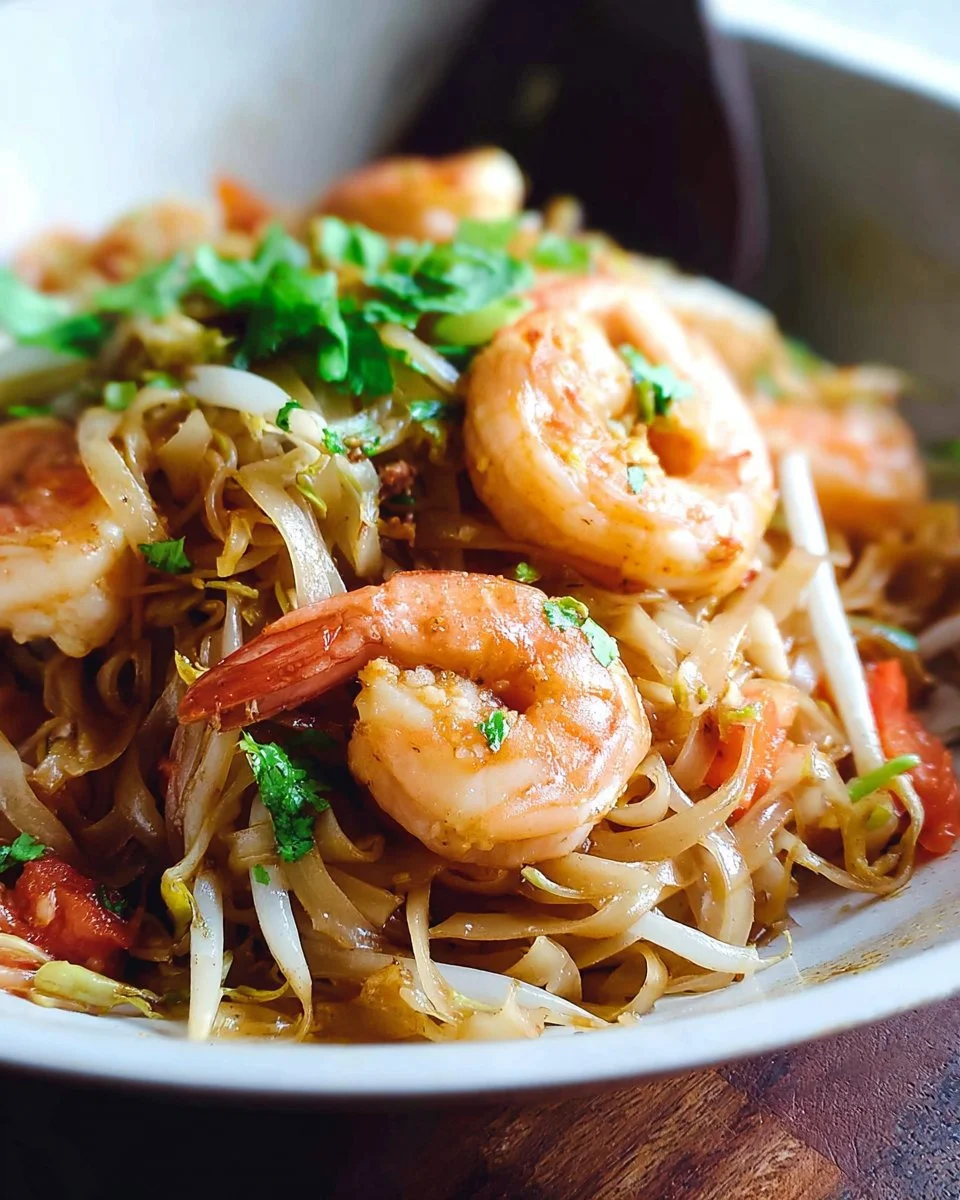
Table of Contents
Why This Shrimp Pad Thai Recipe Works
Soaking the noodles in lukewarm water softens them gently so they finish cooking in the wok instead of turning to mush. Hot water would overcook them before they hit the pan.
The sauce is a balance of tamarind for sourness, palm sugar for sweetness, and fish sauce for salty depth, with a splash of vinegar to sharpen the edges. Tasting and adjusting at the end is part of the fun.
Cooking the shrimp first and adding them back at the end keeps them tender and juicy instead of rubbery.
Ingredients for Shrimp Pad Thai
- 5 ounces dried pad thai rice noodles, medium width
- 12 raw shrimp, shelled and deveined
- 3 ounces firm tofu, cut into small matchsticks
- 1 ounce dried shrimp, rinsed
- 2 large eggs, lightly beaten
- 1 small red shallot, finely sliced
- 5 ounces bean sprouts
- 2 tablespoons garlic chives, cut into 3/4 inch lengths
- 3 tablespoons vegetable oil, divided
- 3 tablespoons fish sauce, for the sauce
- 2 tablespoons palm sugar, or brown sugar, for the sauce
- 2 tablespoons tamarind puree, for the sauce
- 1 teaspoon white vinegar, for the sauce
- 1/2 teaspoon chili powder, or to taste
- 1 teaspoon white sugar, for sprinkling
- 1/3 cup roasted unsalted peanuts, finely ground, for topping
- 1 lime, cut into wedges, for serving
Rice noodles: Look for dried rice sticks labeled for pad thai. They soften in lukewarm water and finish cooking in the pan.
Shrimp and dried shrimp: Fresh shrimp give sweetness and bite, while a small amount of dried shrimp adds deep savory flavor. Skip it if you cannot find it.
Tamarind puree: It provides the signature tang. Use puree, not concentrate, which is much stronger.
Palm sugar and fish sauce: They create the sweet and salty backbone. Brown sugar works if palm sugar is hard to find.
Tofu, sprouts, and chives: Tofu adds protein, sprouts add crunch, and garlic chives give a gentle garlic flavor.
How to Make Shrimp Pad Thai
1. Soak the noodles. Place the noodles in a bowl and cover with lukewarm water. Let them sit for 1 hour, then drain well.
2. Cook the shrimp. Heat 2 tablespoons of the oil in a wok or large heavy skillet over medium heat. Cook the shrimp for about 2 minutes, just until they turn pink and opaque, then move them to a plate.
3. Cook the aromatics. Add the shallot to the same pan and stir fry for 2 minutes until soft.
4. Build the sauce. Add the tofu, dried shrimp, fish sauce, palm sugar, and tamarind puree. Cook for 1 minute until the sugar dissolves.
5. Add the noodles. Add the noodles, vinegar, and chili powder and stir fry for 2 minutes until the noodles are flexible and coated.
6. Scramble the egg. Push the noodles to one side, add the remaining 1 tablespoon of oil, and pour in the eggs. Fold the noodles over the egg and scrape the pan so the egg scrambles into the noodles.
7. Toss it together. Remove from the heat and add half the peanuts, most of the bean sprouts, the garlic chives, and the shrimp. Toss gently.
8. Plate it. Sprinkle with the white sugar and remaining peanuts, then serve at once with lime wedges.
How to Serve Shrimp Pad Thai
Serve right away while the noodles are hot, with extra lime and chili on the side. A cool creamy Asian cucumber salad balances the richness, and Korean beef noodles make a good second dish for a noodle night. Add a scoop of cilantro lime rice for anyone who wants more starch, and finish the evening with a glass of strawberry pineapple mojito.
How to Store and Reheat Shrimp Pad Thai
This dish is ideal when eaten fresh, but leftovers keep in an airtight container in the refrigerator for up to 2 days. Reheat in a hot skillet with a splash of water until steaming, and do not freeze because the noodles turn mushy. Because it contains shrimp and egg, cool leftovers within 2 hours.
Tips and Variations for Shrimp Pad Thai
Do not oversoak: Noodles that are flexible but still firm will finish cooking in the pan. Soft noodles turn gummy.
Prep first: Line up the sauce, shallot, tofu, and sprouts within reach. The stir fry moves quickly.
Cook in batches: If you double the batch, cook it in two rounds. A crowded wok steams the noodles instead of frying them.
Adjust the balance: Taste the sauce before adding the noodles. Add more tamarind for tang, sugar for sweetness, or fish sauce for salt.
Watch the salt: Fish sauce and dried shrimp are salty, so keep the fish sauce measured and skip added salt.
Swap the protein: Chicken, extra tofu, or more shrimp can stand in for the dried shrimp.
Keep the sprouts crisp: Add most of the sprouts at the very end and save some for topping.
Handle shrimp safely: Cook shrimp until opaque and pink, and chill leftovers promptly. For more general guidance, see the University of Minnesota Extension guide to storing leftovers.
Frequently Asked Questions About Shrimp Pad Thai
What is shrimp pad thai made of?
It is made of stir fried rice noodles with shrimp, egg, tofu, bean sprouts, and a sweet and sour sauce of tamarind, palm sugar, and fish sauce, topped with peanuts.
Can I make shrimp pad thai without tamarind?
Tamarind gives the signature flavor, but in a pinch you can use a mix of lime juice and a little brown sugar. The taste will be brighter and less deep.
How do I keep shrimp pad thai from getting sticky?
Soak the noodles in lukewarm water instead of boiling them, drain well, and cook in a hot wok in small batches. Do not stir too much.
Can I leave out the fish sauce?
You can use a little low sodium soy sauce instead, though the flavor will be less traditional. Start with a smaller amount and taste.
Is pad thai gluten free?
Rice noodles are naturally gluten free, but check the labels on the fish sauce and tamarind for added ingredients.
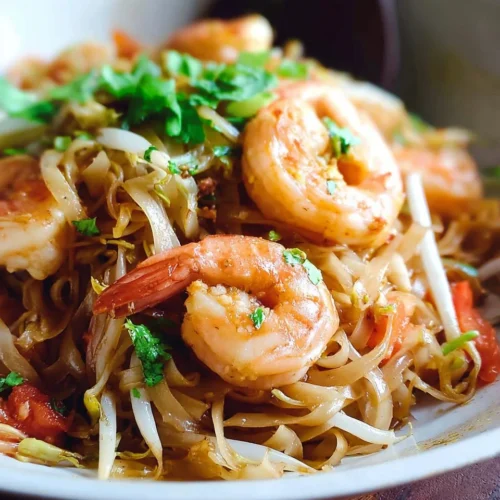
Shrimp Pad Thai with Tofu and Peanuts
Equipment
- Wok or large skillet
- Large bowl
- Colander
- Spatula
Ingredients
Main Ingredients
- 5 oz dried pad thai rice noodles medium width
- 12 raw shrimp shelled and deveined
- 3 oz firm tofu cut into small matchsticks
- 1 oz dried shrimp rinsed
- 2 large eggs lightly beaten
- 1 small red shallot finely sliced
- 5 oz bean sprouts
- 2 tbsp garlic chives cut into 3/4 inch lengths
- 3 tbsp vegetable oil divided
- 3 tbsp fish sauce for the sauce
- 2 tbsp palm sugar or brown sugar, for the sauce
- 2 tbsp tamarind puree for the sauce
- 1 tsp white vinegar for the sauce
- ½ tsp chili powder or to taste
- 1 tsp white sugar for sprinkling
- ⅓ cup roasted unsalted peanuts finely ground, for topping
- 1 lime cut into wedges, for serving
Instructions
Cooking
- Soak. Cover the noodles with lukewarm water for 1 hour and drain.
- Sear the shrimp. Cook the shrimp in 2 tablespoons of oil over medium heat for 2 minutes until pink, then set aside.
- Make the base. Stir fry the shallot for 2 minutes, then add the tofu, dried shrimp, fish sauce, palm sugar, and tamarind and cook for 1 minute until dissolved.
- Add noodles. Add the noodles, vinegar, and chili powder and stir fry for 2 minutes.
- Add the egg. Push the noodles aside, heat the last tablespoon of oil, scramble the eggs, and mix them in.
- Finish. Off the heat, toss with half the peanuts, the sprouts, chives, and shrimp. Top with sugar, the remaining peanuts, and lime.